Community solar lighting · Philippines
Light that communities can build, carry, and repair.
Liter of Light turns practical engineering, reclaimed materials, and community knowledge into portable solar lighting for families beyond reliable power grids.
Measured impact
More than a lamp
Local training, repairable systems, and material reuse extend each light’s value far beyond the first night.
Nighttime lighting has increased children’s study time by an average of two hours, while community nighttime activities and small-business activity have increased by 40%. More than 500 young people have joined training and environmental-awareness activities, supported by long-term collaboration with more than five local partners and recognition through more than three sustainability and community-innovation awards.
Founder introduction
Sarah
(Linyan) Zou
Founder of Liter of Light
Student at La Salle-Bacolod Integrated School, Philippines
Sarah (Linyan) Zou is a young innovator and social entrepreneur from the Philippines. She is a student at La Salle-Bacolod Integrated School and the founder of the nonprofit project Liter of Light.
Sarah and her teammates started Liter of Light to collect discarded electronics and reuse solar panels and LED lights. Using engineering skills, they turn these materials into portable solar lamps for families without reliable electricity.
So far, the team has made more than 500 lamps. They work with local schools and community centers to distribute the lamps. They also hold workshops to teach villagers how to make their own lamps.
A lamp means much more than light. It means that a child can read one more page at night, an older person can continue working after dark, and a family can still sit together in the evening.
If you also believe in the power of light, you are welcome to join us. You can donate an old electronic device or help share our story with more people. You can become part of the light.
The light in everyday life
What becomes possible after dark
These scenes show how portable solar lighting supports study, mobility, craft, and household work in Philippine communities.
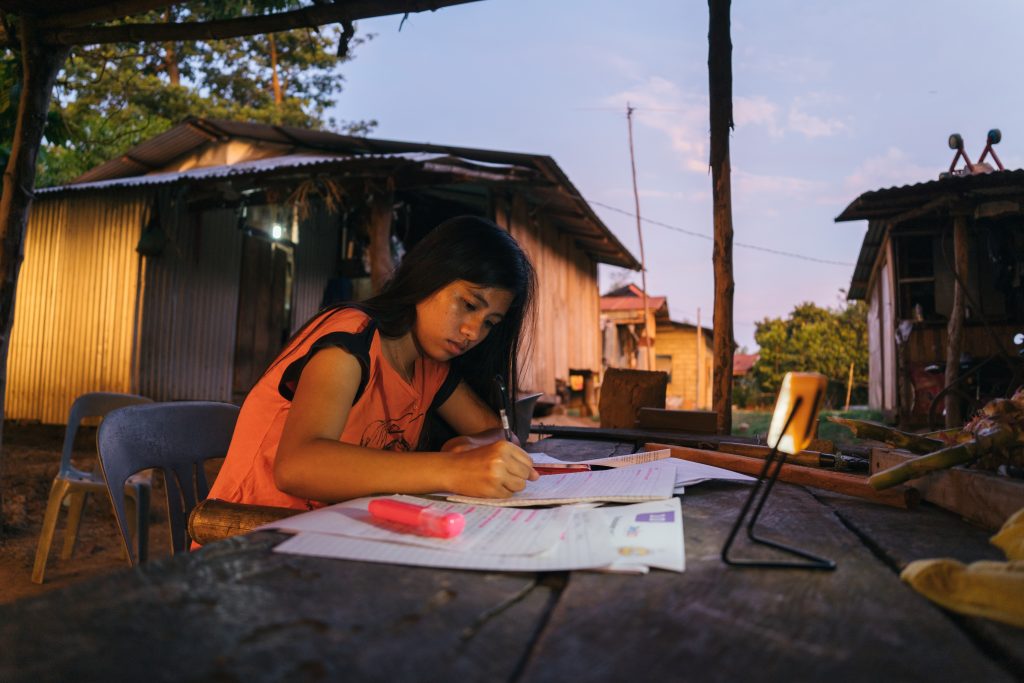
Children Studying by Solar Light
La Union, Philippines. A girl uses an SM200 solar light to do her homework at dusk. The lamp casts steady, focused light across her books, while the background remains a rural home without reliable indoor electricity.
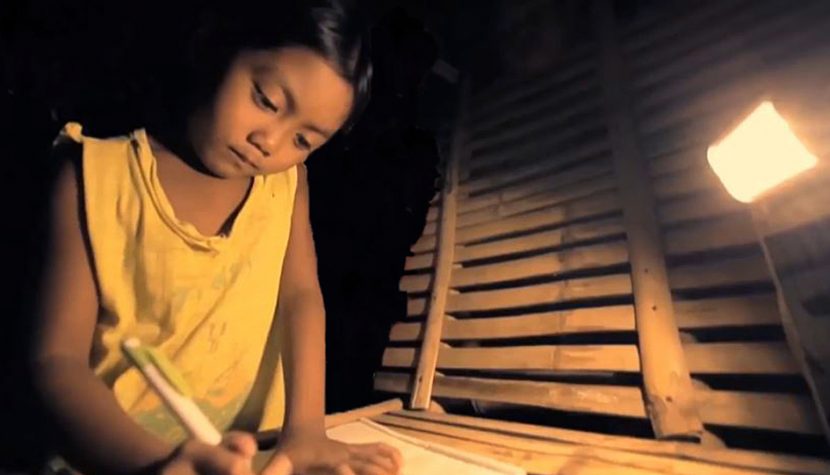
Children Studying by Solar Light
Mansalay, Oriental Mindoro. A child from an Indigenous community studies by a solar lamp inside a bamboo-and-timber home. The lamp replaces kerosene lamps, which pose fire and smoke hazards and require ongoing fuel purchases.
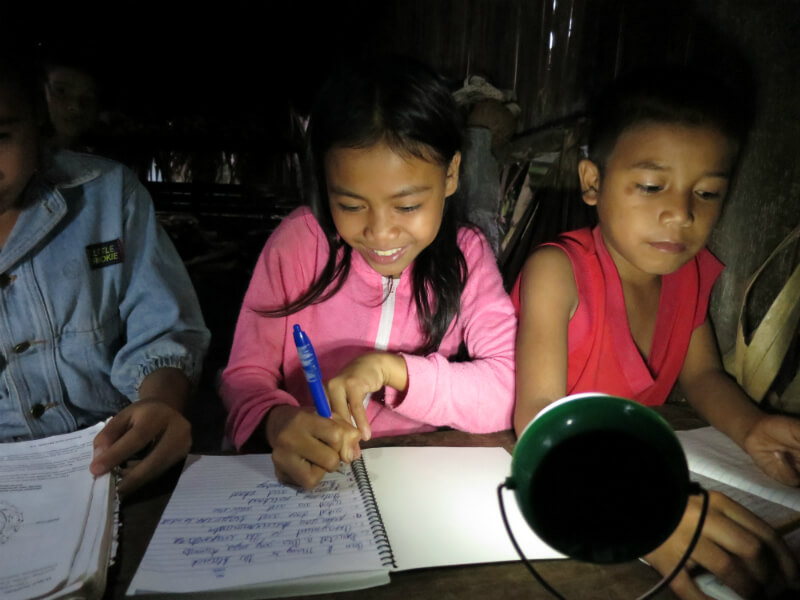
Children Studying by Solar Light
Philippines. Three children gather around a portable Nokero solar light to complete their homework.
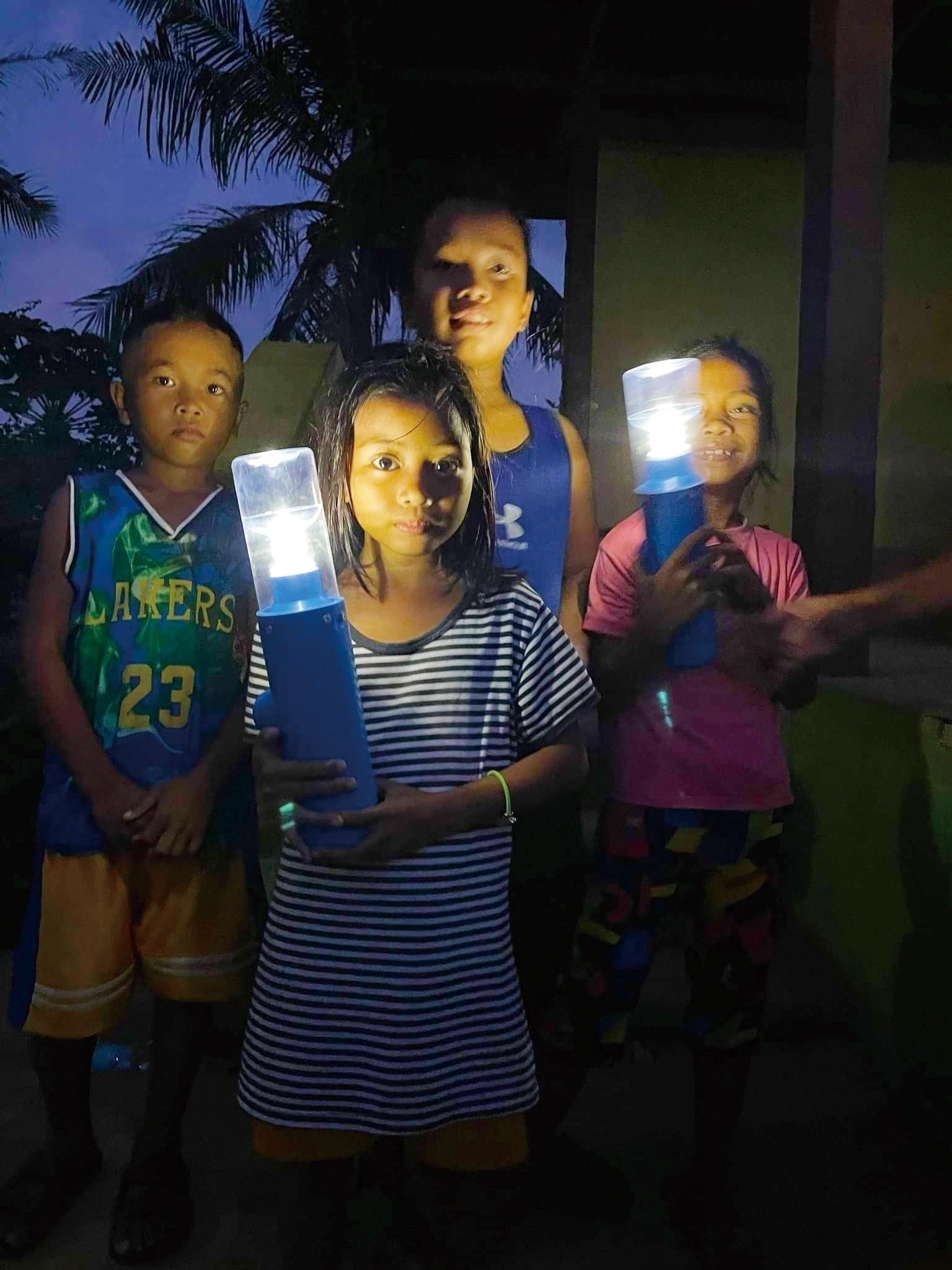
Children Studying by Solar Light
Jose Abad Santos, Mindanao. Children in a remote community display the portable solar lights they received after dark. A handle, wide base, and side diffuser make each light easy to carry between the walk home, studying, and family activities.
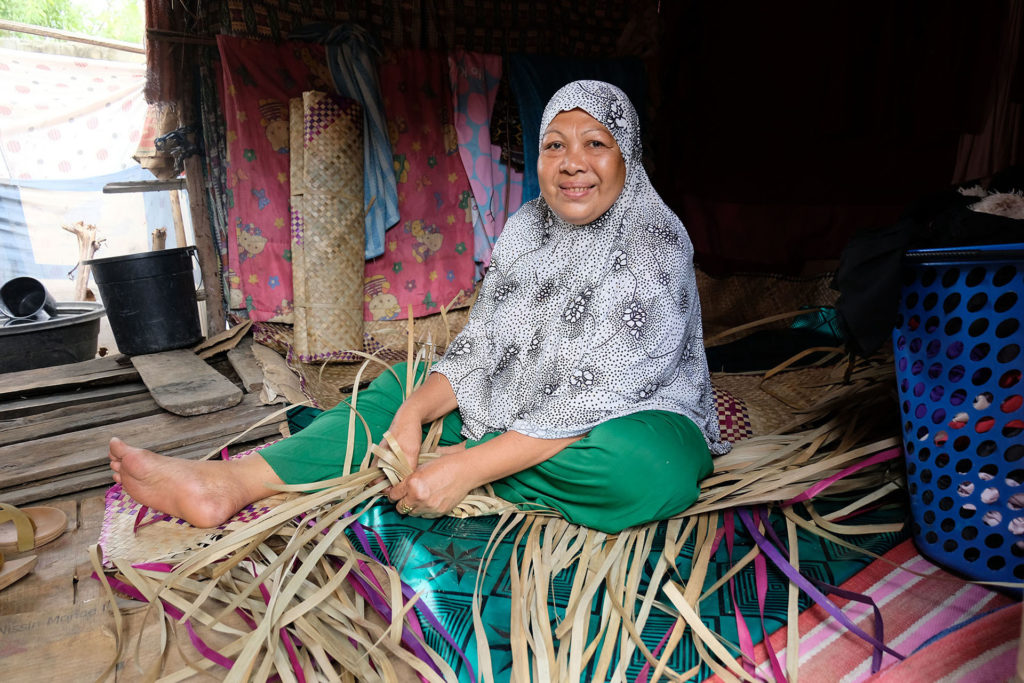
Helping Elders Continue Their Craft and Livelihood After Dark
Datu Hoffer, Maguindanao. At age 53, Zulaika Lamikan continues weaving ikam mats in an evacuation camp. Solar lighting allows her to keep working after dark without relying on dim kerosene lamps that require repeated fuel purchases.

Helping Elders Continue Their Craft and Livelihood After Dark
The same weaver with the solar lamp she uses. Together, these two photos document the experience of weaving by lamplight: one records her work during the day, while the other shows the portable light that allows her to continue working at night.
Design fieldbook
From reclaimed parts to working light
Browse 100 images covering community assembly, portable forms, solar collection, electronic reuse, soldering, LEDs, and energy storage.
001
IMG 0354.JPG
Assembly can be completed using common tools.
002
60015909 423622788430795 2413462374116753408 n.jpg
The enclosure should be easy to open for battery replacement and repairs.
003
59784761 1895527043885438 3050349983380275200 n.jpg
The light angle should support reading, sewing, and household tasks.
004
59719673 286449885594537 5043415667164839936 n.jpg
Prioritize containers and components that are readily available locally.
005
59713119 359824421309879 7331760502873260032 n.jpg
Assembly can be completed using common tools.
006
59955761 1290942564386726 3445616798588731392 n.jpg
The enclosure should be easy to open for battery replacement and repairs.
007
60045424 801990190183660 4606583588689805312 n.jpg
The light angle should support reading, sewing, and household tasks.
008
R cup ration de batteries Re cuperation batteries - fonctionnement.jpg
Prioritize containers and components that are readily available locally.
009
R cup ration de batteries 1 - Ouverture batterie.jpg
Assembly can be completed using common tools.
010
R cup ration de batteries 2 - De cortiquer cellules.jpg
The enclosure should be easy to open for battery replacement and repairs.
011
Powerbank simple IMG 0952.jpg
The light angle should support reading, sewing, and household tasks.
012
Lampe solaire batteries lithium r cup r es R cup ration de batteries 3 - Charge batteries.jpg
Prioritize containers and components that are readily available locally.
013
Lampe solaire batteries lithium r cup r es R cup ration de batteries 4 - De charger cellules IMax .jpg
Assembly can be completed using common tools.
014
Lampe solaire batteries lithium r cup r es Sch ma circuit.JPG
The enclosure should be easy to open for battery replacement and repairs.
015
Lampe solaire batteries lithium r cup r es Sch ma montage lampe LED-1.jpg
The light angle should support reading, sewing, and household tasks.
016
59617234 1691814157630745 3212849031642349568 n.jpg
Prioritize containers and components that are readily available locally.
017
Photo tupperware.jpg
Assembly can be completed using common tools.
018
Photo tupperware4.jpg
The enclosure should be easy to open for battery replacement and repairs.
019
Photo tupperware2.jpg
The light angle should support reading, sewing, and household tasks.
020
Photo tupperware3.jpg
Prioritize containers and components that are readily available locally.
021
MVI 0262 Moment.jpg
Assembly can be completed using common tools.
022
MVI 0279 Moment.jpg
The enclosure should be easy to open for battery replacement and repairs.
023
MVI 0282 Moment.jpg
The light angle should support reading, sewing, and household tasks.
024
MVI 0290 Moment.jpg
Prioritize containers and components that are readily available locally.
025
MVI 0309 Moment.jpg
Assembly can be completed using common tools.
026
MVI 0334 Moment.jpg
The enclosure should be easy to open for battery replacement and repairs.
027
LED50 freigestellt min.gif
The lamp body should be lightweight and drop-resistant so it can be moved quickly during a power outage.
028
Lampada solare 1.jpg
029
Lampada solare 2.jpg
The handle, base, and diffuser should balance stability with glare reduction.
030
Lampada solare 5.jpg
Prioritize replaceable batteries, removable LED boards, and standard connectors.
031
Solar camping ight.jpg
The lamp body should be lightweight and drop-resistant so it can be moved quickly during a power outage.
032
Solar cell-powered light (1).jpg
033
Solar cell-powered light (2).jpg
The handle, base, and diffuser should balance stability with glare reduction.
034
Solar integrated light.jpg
Prioritize replaceable batteries, removable LED boards, and standard connectors.
035
Solar lamp mechanism.png
The lamp body should be lightweight and drop-resistant so it can be moved quickly during a power outage.
036
Solar Lantern.jpg
037
Solar Light.jpg
The handle, base, and diffuser should balance stability with glare reduction.
038
Solar Tatadeep Lantern, 2008 (cropped).jpg
Prioritize replaceable batteries, removable LED boards, and standard connectors.
039
Solarlampe Innenansicht.jpg
The lamp body should be lightweight and drop-resistant so it can be moved quickly during a power outage.
040
Solarlight.JPG
041
Solaru lantaru.jpg
The handle, base, and diffuser should balance stability with glare reduction.
042
Sonnenglas.jpeg
Prioritize replaceable batteries, removable LED boards, and standard connectors.
043
WakaWaka2017.jpg
The lamp body should be lightweight and drop-resistant so it can be moved quickly during a power outage.
044
0596Views of Talampas irrigation canals fields bridges 31.jpg
Users should be able to understand the charging status at a glance.
045
0596Views of Talampas irrigation canals fields bridges 32.jpg
Panel angle, shade, and rainy-season weatherproofing determine the available lighting time each day.
046
0596Views of Talampas irrigation canals fields bridges 33.jpg
A separate small panel makes it easy to place the panel outdoors and the lamp indoors.
047
0677Views of Talampas irrigation canals fields bridges 31.jpg
Connectors and wiring need protection and secure mounting in hot, humid environments.
048
0677Views of Talampas irrigation canals fields bridges 33.jpg
Users should be able to understand the charging status at a glance.
049
06989JfMega Flood Control Highway Bridge River Boatsfvf 20.JPG
Panel angle, shade, and rainy-season weatherproofing determine the available lighting time each day.
050
06989JfMega Flood Control Highway Bridge River Boatsfvf 23.JPG
A separate small panel makes it easy to place the panel outdoors and the lamp indoors.
051
06989JfMega Flood Control Highway Bridge River Boatsfvf 28.JPG
Connectors and wiring need protection and secure mounting in hot, humid environments.
052
06989JfMega Flood Control Highway Bridge River Boatsfvf 29.JPG
Users should be able to understand the charging status at a glance.
053
06989JfMega Flood Control Highway Bridge River Boatsfvf 31.JPG
Panel angle, shade, and rainy-season weatherproofing determine the available lighting time each day.
054
3197Coronavirus pandemic in Baliuag, Bulacan 39.jpg
A separate small panel makes it easy to place the panel outdoors and the lamp indoors.
055
784Naparing, Dinalupihan Mabiga Hermosa, Bataan 32.jpg
Connectors and wiring need protection and secure mounting in hot, humid environments.
056
784Naparing, Dinalupihan Mabiga Hermosa, Bataan 33.jpg
Users should be able to understand the charging status at a glance.
057
784Naparing, Dinalupihan Mabiga Hermosa, Bataan 34.jpg
Panel angle, shade, and rainy-season weatherproofing determine the available lighting time each day.
058
9739Philippine Independence Day, Rizal Park 20.jpg
A separate small panel makes it easy to place the panel outdoors and the lamp indoors.
059
9739Philippine Independence Day, Rizal Park 21.jpg
Connectors and wiring need protection and secure mounting in hot, humid environments.
060
Hibok-hibok Volcano Remote Monitoring Station.jpg
Users should be able to understand the charging status at a glance.
061
Solar panels in the Philippines 09.jpg
Panel angle, shade, and rainy-season weatherproofing determine the available lighting time each day.
062
Terra Solar Meralco solar panel.jpg
Connectors and wiring need protection and secure mounting in hot, humid environments.
063
0ld keyboards.JPG
Document component origins and test results to support repair training.
064
2SA798 dual pnp transistor, around 1977.jpg
Reclaimed parts must undergo visual inspection, voltage, capacity, and safety testing.
065
Badly corroded transistor (2SC1625) from a 1980s set.jpg
Corroded, swollen, or damaged cells should be sent to an authorized recycler.
066
Board mother tarjeta madre crista castellanos.jpg
Sorting and disassembly make it easier to recover wires, switches, connectors, and enclosures.
067
Brokencircuitboard2011.jpg
Reclaimed parts must undergo visual inspection, voltage, capacity, and safety testing.
068
Cell phone trash.jpg
Corroded, swollen, or damaged cells should be sent to an authorized recycler.
069
Electronic junk separation in view of recycling 3.jpg
Document component origins and test results to support repair training.
070
Electronic junk separation in view of recycling 5.jpg
Corroded, swollen, or damaged cells should be sent to an authorized recycler.
071
Electronic junk separation in view of recycling 6.jpg
Sorting and disassembly make it easier to recover wires, switches, connectors, and enclosures.
072
Electronic junk separation in view of recycling 7.jpg
Document component origins and test results to support repair training.
073
Electronic junk separation in view of recycling 8.jpg
Reclaimed parts must undergo visual inspection, voltage, capacity, and safety testing.
074
Electronic junk separation in view of recycling 9.jpg
Corroded, swollen, or damaged cells should be sent to an authorized recycler.
075
Common-soldering-tip-styles.png
Workshops should also cover multimeter use, polarity identification, and battery safety.
076
Dipsoldering1.jpg
Solder joints should be secure and insulated, with strain relief for the wires.
077
Dipsoldering2.jpg
Modular circuits support repeatable instruction in schools and community centers.
078
Dipsoldering3.jpg
Common specifications make future component replacement easier.
079
Glasfaserradierer Platine 3203.jpg
Workshops should also cover multimeter use, polarity identification, and battery safety.
080
Lead Free Process Window Index.svg
Solder joints should be secure and insulated, with strain relief for the wires.
081
Loetoesen600.PNG
Modular circuits support repeatable instruction in schools and community centers.
082
Material aportacion y fundente.JPG
Common specifications make future component replacement easier.
083
Rosin core electrical solder with labels.jpg
Workshops should also cover multimeter use, polarity identification, and battery safety.
084
Soldering-PCB-square.jpg
Solder joints should be secure and insulated, with strain relief for the wires.
085
Arduino Mega 2560.jpg
Modular circuits support repeatable instruction in schools and community centers.
086
Arduinome - Assembling (2009-06-10 14.53.20 by c-g.).jpg
Common specifications make future component replacement easier.
087
Arduinome - Assembling (2009-06-10 14.58.05 by c-g.).jpg
Workshops should also cover multimeter use, polarity identification, and battery safety.
088
Arduinome - Assembling (2009-06-10 15.32.54 by c-g.).jpg
Solder joints should be secure and insulated, with strain relief for the wires.
089
Electronic component led displays.jpg
Used lithium cells should be tested individually and fitted with protection circuits.
090
Foto de un montaje superficial con LEDs de los tamaños más corrientes.jpg
Low-power design allows smaller panels to provide longer nighttime illumination.
091
LED Querschnitt bestromt.jpg
Cell capacity and protection boards should match the lamp load.
092
Radioamateur - ER LED visible.jpg
LED efficiency, thermal management, and color temperature jointly determine comfort and runtime.
093
Белый светодиод 20Вт.jpeg
Used lithium cells should be tested individually and fitted with protection circuits.
094
18650 and 21700 lithium ion battery cell.jpg
Low-power design allows smaller panels to provide longer nighttime illumination.
095
90laptopbattery.jpg
Cell capacity and protection boards should match the lamp load.
096
Bateria liion.JPG
LED efficiency, thermal management, and color temperature jointly determine comfort and runtime.
097
Batería BL-5C 2.jpg
Used lithium cells should be tested individually and fitted with protection circuits.
098
BL-4C Nokia battery.jpg
Low-power design allows smaller panels to provide longer nighttime illumination.
099
BL-5C Nokia battery.jpg
Cell capacity and protection boards should match the lamp load.
100
Bloated rechargeable batteries.jpg
LED efficiency, thermal management, and color temperature jointly determine comfort and runtime.